Pearl Connect gives WeddingSaaS a concrete update to the David’s Bridal platform story: the vendor side now has an explicitly connected discovery and working environment. Pearl’s September 17, 2026 introduction describes a platform combining communication, calendars and tasks, appointments, and a Pearl Planner listing. Its published offer includes a free entry tier and paid tools. These are the company’s descriptions, not results from an independent WeddingSaaS product trial. 1
Our interpretation: the interesting competitive move is the attempt to bring a vendor’s daily decisions into the same environment that introduces prospective couples. A directory visit happens occasionally. An inbox can become part of every working day. Whether that becomes a useful business advantage depends on lead fit, reliability and control over the customer relationship.
What is new—and what is still a claim
The current Pearl Connect product page describes matching within Pearl Planner, lead context, messaging, appointment booking and AI-assisted prioritisation. It also describes reply drafts that the vendor edits and sends. Availability and plan inclusions should be checked directly before purchase. 2
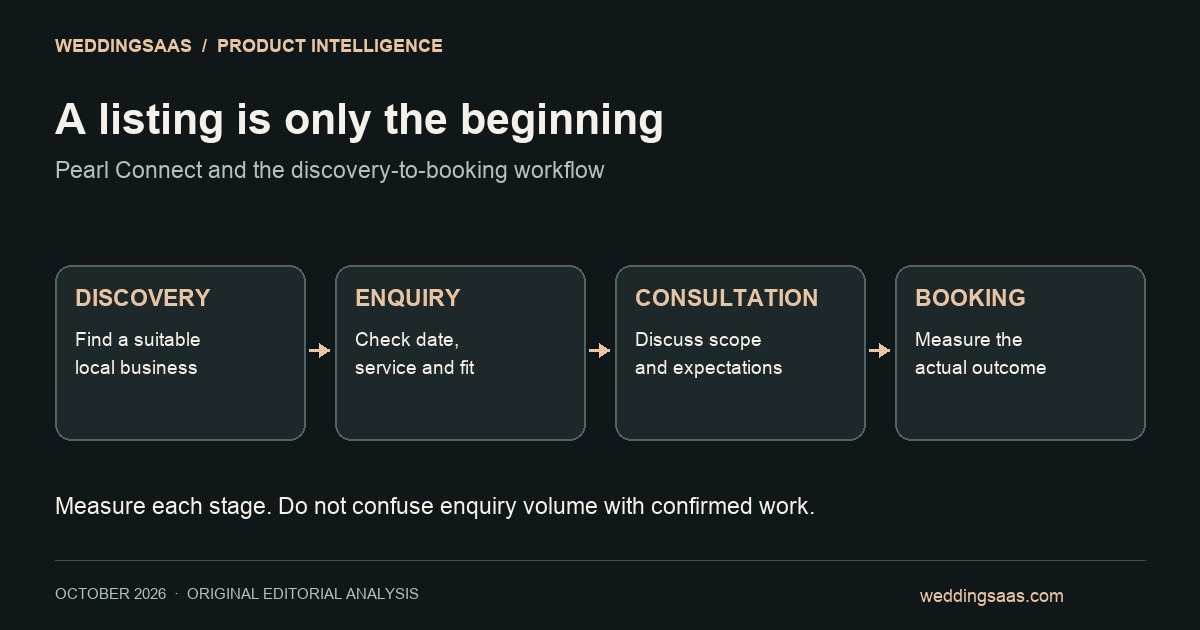
Those features do not establish conversion performance. An announcement cannot tell a photographer how many suitable enquiries will arrive in a particular city, whether those dates are already booked, or how many consultations turn into profitable jobs. We have not verified booking uplift, response accuracy or local enquiry volume. Treat those as evaluation questions rather than launch-day facts.
Measure the funnel by service area and date
For a vendor considering a trial, create a simple source log. Record the enquiry date, wedding date, service area, requested service, stated budget, first response and eventual outcome. A couple can be enthusiastic and still be outside your travel radius or looking for a Saturday you cannot supply.
Keep enquiry count, qualified enquiry count, consultations and confirmed bookings separate. Define qualification before looking at results: the requested service fits, the location is workable, the date is available and the budget is within a range the business can discuss. Record why an enquiry failed that test. This turns a vague complaint about lead quality into information that can guide the listing.
Compare the time spent handling those enquiries with the work needed for your existing channels. Use comparable periods and account for wedding seasonality. A small sample can reveal workflow problems, but it should not be treated as proof that one marketplace consistently outperforms another.
An inbox connection deserves a practical test
Before connecting a working inbox, review which accounts and messages the service can access, what it stores and how access can be revoked. Ask how staff access works when a coordinator leaves. A florist with shared event mail and a solo photographer with a personal inbox face different setup decisions.
Test a few ordinary situations with non-sensitive sample information: two couples asking for the same date, an enquiry outside the service area, and a returning client changing a package. Check that the draft reflects actual availability and that the person responsible can review it. Fast replies only help when the details are right.
The opportunity for independent wedding software
Our analysis is that smaller software businesses do not need to copy an entire consumer marketplace to respond. They can make the handoff from discovery more useful: preserve the source, keep the original brief, make duplicate enquiries recognisable and show who owns the next action.
A wedding planner should be able to distinguish a recommendation from an appointment and an appointment from a confirmed engagement. Products that blur those states may look busy while creating extra checking work. Clear stages, accessible records and a sensible export are valuable even without a large audience.
The next reporting question is therefore operational: can a vendor use this channel alongside the rest of the business without losing context or duplicating work? That is the evidence worth revisiting after adoption. For the broader context behind this launch, see David's Bridal Is No Longer a Dress Company — And the Wedding Tech Industry Should Pay Attention (Analyst Edition).
Editorial position
This is a news analysis based on the primary sources below, checked October 6, 2026. It is not a hands-on review, a recommendation to buy, or evidence of an affiliation with Pearl or David’s Bridal. WeddingSaaS is published by Weddings.io Technologies, which operates in the wedding technology sector.
References
- Pearl by David’s, September 17, 2026. Launch explanation and published membership structure. Meet Pearl Connect
- Pearl Connect product page. Features and availability checked October 6, 2026. Pearl Connect product information