When Discern Security announced a $13 million Series A to expand its AI-powered cybersecurity platform for businesses, it didn't look like wedding industry news.
It was.
Not because wedding planners suddenly need enterprise security operations centers. But because the underlying infrastructure that once belonged exclusively to Fortune 500 IT departments is rapidly becoming affordable, API-driven, and embedded inside everyday SaaS products.
Payments followed this path. Electronic signatures followed this path. Identity verification followed this path.
Cybersecurity and compliance are next.
The wedding technology market has spent the last decade competing on workflow automation, online contracts, payment processing, scheduling, galleries, and client communication. Those capabilities are now expected. The next competitive advantage may not be another workflow feature — it may be trust infrastructure.
The Hidden Data Economy Behind Every Wedding
Wedding businesses are often viewed as creative service providers. Increasingly, they are also custodians of sensitive digital information.
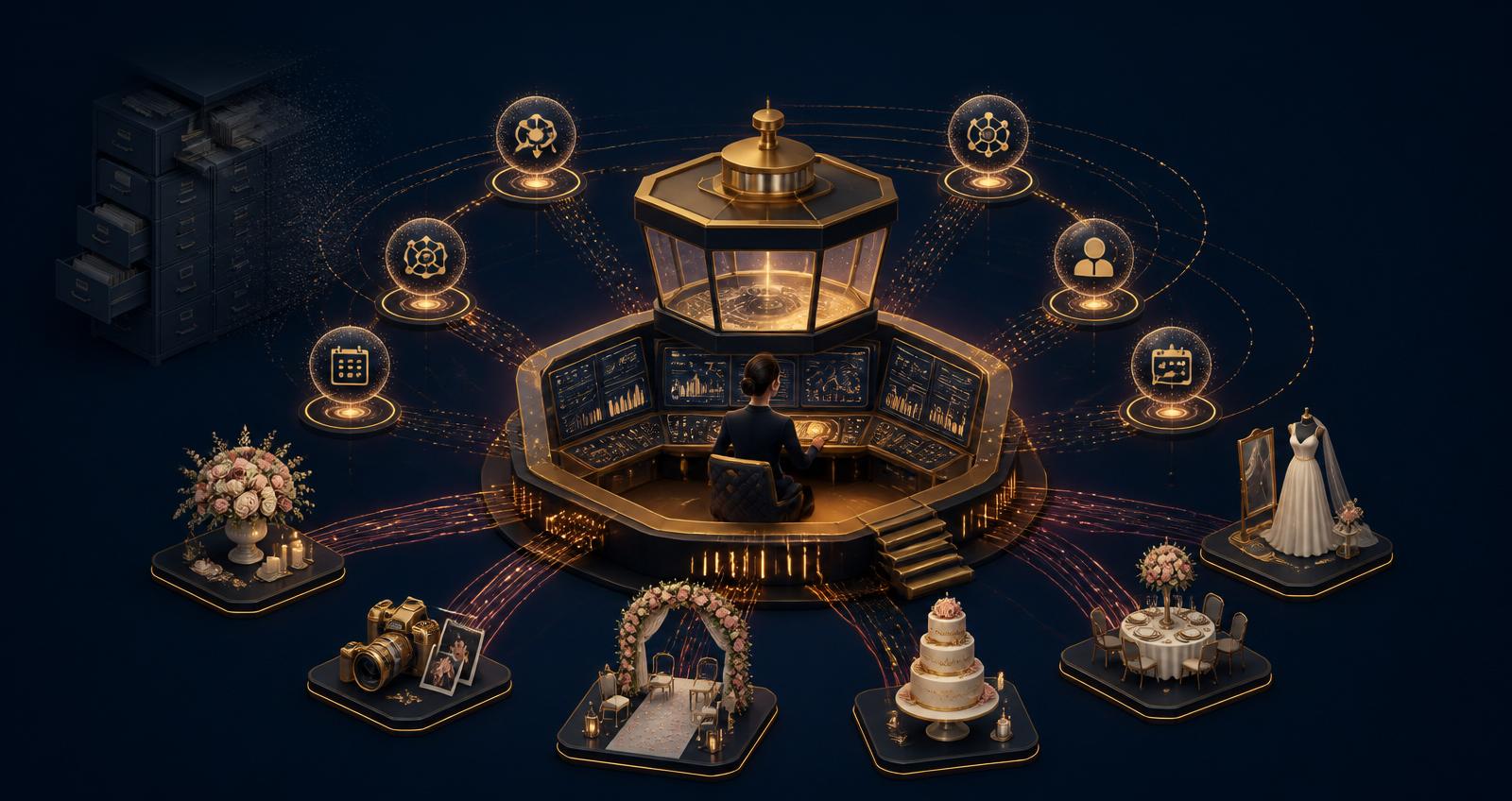
A single event can generate contracts, invoices, payment records, guest contact information, accommodation details, venue schedules, floor plans, vendor agreements, private timelines, and thousands of digital photographs. Much of this information now lives inside cloud software. It moves through CRMs. It is shared through client portals. It is synchronized between payment systems, scheduling platforms, storage providers, and communication tools.
The modern wedding business is no longer paper-based. It is data-driven.
The Vendor-to-Vendor Data Chain
Unlike many industries, weddings operate as interconnected ecosystems rather than isolated businesses.
One event may involve a planner, venue, photographer, videographer, florist, caterer, rental company, transportation provider, entertainment, officiant, hotel partners, and multiple freelancers. Information flows between nearly every participant. Guest lists become seating charts. Timelines become production schedules. Contracts become invoices. Travel information reaches transportation companies and accommodation partners.
Each transfer introduces another point where information is stored, copied, downloaded, or shared.
This matters because the overall security of a client's data is not determined by the strongest vendor in the network. It is determined by the weakest. For software platforms serving this market, that systemic exposure represents a structural opportunity — the platform that owns the workflow is best positioned to secure it.
Small Businesses Are the Primary Target
The instinct in most creative industries is to assume cybercrime is someone else's problem. Large hospitals. Banks. Retail chains. The data says otherwise.
Ransomware was present in 88% of all breaches affecting small and midsize businesses in 2025, compared to just 39% at large enterprises.1 SMBs are not getting hit occasionally. They are the primary target — selected precisely because they hold valuable data and typically lack the security controls of larger organizations.2
The financial consequences are severe. The Identity Theft Resource Center's 2025 Business Impact Report found that 62.5% of small business breach victims reported total financial impact above $250,000.3 Veeam's research adds a more direct finding: cybercriminals specifically target small and medium businesses for extortion on the assumption that they lack the means to recover their data without paying.4
Wedding businesses are not exempt from this pattern. A solo photographer with five years of undelivered RAW files on an unencrypted cloud drive is a more efficient target than a mid-market company with a security operations team. The data is valuable. The defenses are minimal. The math works for attackers.
What the Discern Security Funding Signals
The significance of Discern Security's funding is not the company itself. It is what the investment reflects.
Across enterprise software, security capabilities that once required dedicated infrastructure — AI-assisted anomaly detection, behavior monitoring, automated threat identification, access intelligence, compliance reporting — are becoming modular services that software companies can integrate into their own platforms. These capabilities are steadily moving down-market.
For vertical SaaS providers, including wedding technology companies, the cost of incorporating practical security features continues to decline. That changes the competitive equation. A platform that could not have justified the engineering investment to build a compliance layer two years ago can now purchase those capabilities as an API and deliver them to its users as native features.
The window to move first is open. It will not stay open.
The Compliance Layer as a Competitive Moat
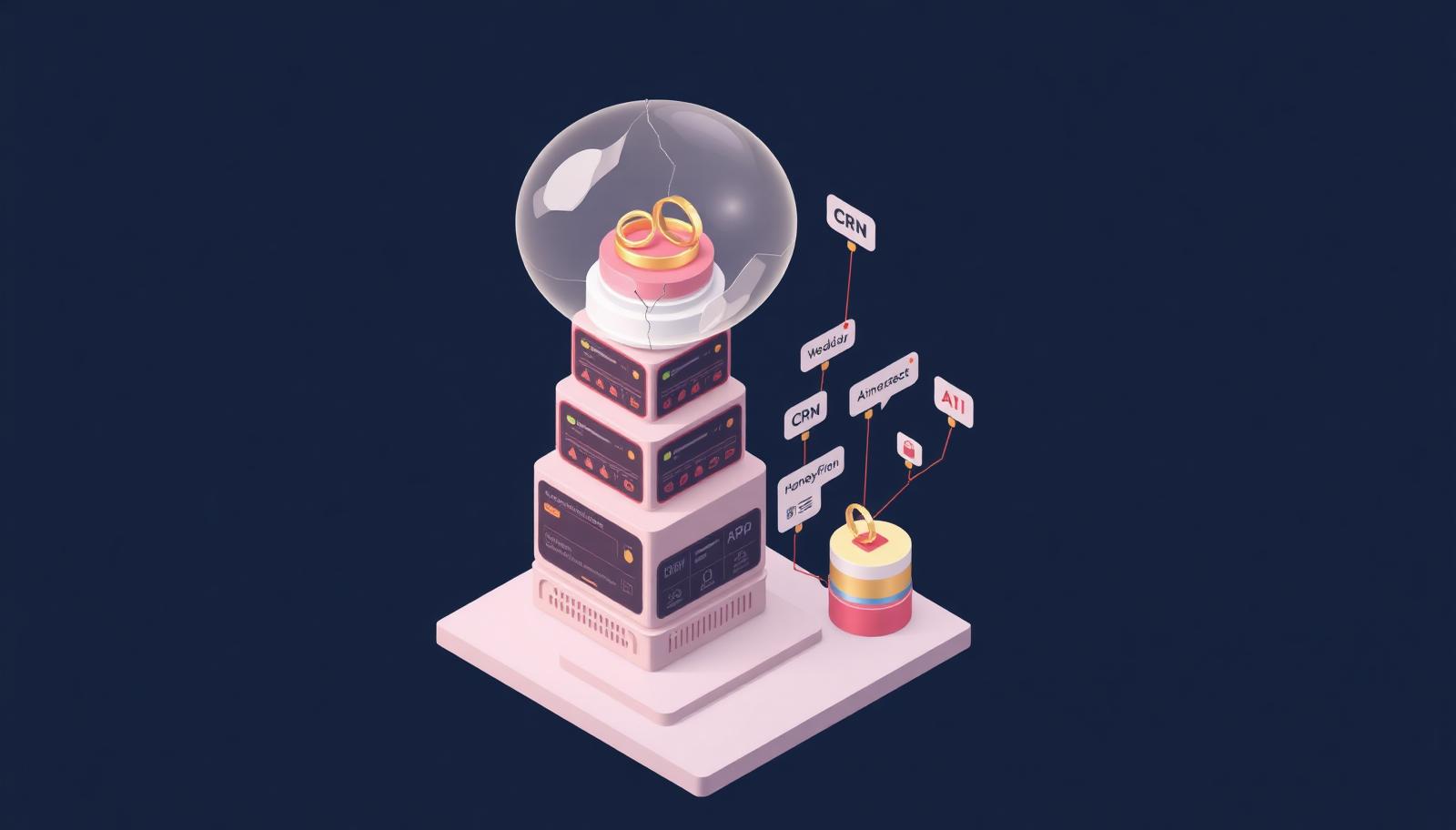
Most wedding platforms already manage contracts, payments, documents, client communication, file delivery, calendars, and permissions. Adding compliance is not creating an entirely new product. It is adding a layer of intelligence and protection around data the platform already holds.
A platform offering organization-wide multi-factor authentication, encrypted client portals, permission-based access controls for teams and contractors, immutable audit logs, secure gallery delivery, automated data retention and deletion policies, compliance dashboards, and guided breach response workflows is not selling a new feature category.
It is selling confidence. More importantly, it is increasing operational dependence.
Why Compliance Creates Switching Costs
Software companies compete on features. Infrastructure companies compete on trust.
A CRM can be replaced. A booking system can be migrated. But once a platform becomes the system of record for contracts, audit trails, access controls, compliance documentation, and data governance, migration becomes substantially more complex.
The platform is no longer simply helping a business operate. It is helping the business demonstrate accountability.
That creates switching costs that feature-level competition cannot replicate. The payments industry demonstrated this. Embedded compliance may become the next durable moat in wedding SaaS.
Regulation and Risk Are Moving Downstream
The regulatory environment is accelerating this shift in three specific ways.
California SB 122. Signed by Governor Newsom on June 29, 2026, SB 122 extends California's sales and use tax to prewritten software and SaaS products effective January 1, 2027.5 For wedding SaaS platforms with California customers, this creates a new compliance obligation — and a corresponding expectation from customers that the platforms they rely on understand and help them navigate that regulatory environment. WeddingSaaS has covered the implications of SB 122 for wedding tech companies in detail.6
International data protection. Wedding businesses operating in destination markets increasingly encounter GDPR obligations and equivalent privacy frameworks. The platforms managing that data bear growing responsibility for how it is handled, transferred, and stored across jurisdictions.
Cyber liability insurance. This is the most immediate economic pressure. S&P Global Ratings has forecast a 15–20% premium increase in cyber insurance for 2026.7 More materially, insurers are tightening the security controls they require before issuing coverage — and denying claims where basic controls were absent.8 The eight controls carriers now consistently underwrite against include multi-factor authentication, endpoint detection, and documented incident response procedures.[9]
A wedding SaaS platform that helps its vendors document and demonstrate those controls is delivering measurable economic value. It is not a nice-to-have. It is reducing a real, recurring cost.
The Platform That Moves First
For years, wedding SaaS has competed on workflow depth. Tomorrow, it may compete on trust.
The first platform to make security visible — not buried in documentation, but presented as a meaningful product benefit that vendors can point to when a high-value client asks how their data is protected — has an opportunity to redefine buyer expectations across the category.
This does not require enterprise-grade complexity. It requires practical safeguards delivered in ways small businesses can understand, adopt, and communicate to clients.
The wedding industry manages deeply personal moments, sensitive financial information, and irreplaceable memories. The platforms supporting that work are no longer just workflow tools. They are custodians of trust.
The next category leader may not be the platform with the most features. It may be the one that builds like it understands the responsibility that comes with the data it already holds.
WeddingSaaS covers the founders, software platforms, investors, and technologies shaping the global wedding technology economy.
References
- Verizon 2025 Data Breach Investigations Report, analyzing more than 22,000 security incidents and 12,195 confirmed breaches; ransomware present in 88% of SMB breaches versus 39% at large enterprises. Verizon DBIR
- Veeam, 2025 Ransomware Trends Report: cybercriminals target SMBs for extortion on the assumption that smaller organizations lack the means to recover their data without paying. Veeam
- Identity Theft Resource Center, 2025 Business Impact Report: 62.5% of small business breach victims reported total financial impact above $250,000. ITRC
- California SB 122, signed June 29, 2026, effective January 1, 2027 — extends sales and use tax to prewritten software and SaaS. California Legislative Information
- WeddingSaaS, California's New SaaS Tax Is Coming in 2027: What Wedding Tech Companies Need to Know (July 22, 2026). weddingsaas.com
- S&P Global Ratings, 2026 cyber insurance premium forecast: 15–20% increase. S&P Global Ratings
- MIS Solutions, Cyber Insurance Requirements Are Changing in 2026 — carrier control requirements and claim denials where controls were absent. mis-solutions.com
- CompareCheapSSL, Cyber Insurance Statistics 2025–2026, citing underwriting requirements across major carriers. comparecheapssl.com