The person best placed to spot a useful wedding-software opportunity might be the planner rebuilding a timeline at midnight.
Or the venue coordinator reconciling three versions of a guest count. Or the photographer trying to establish which family combinations actually matter to the couple.
These professionals understand problems that a product team can easily underestimate. AI-assisted building gives them another way to turn that knowledge into something useful.
The opportunity is significant. So is the distance between a convincing demonstration and a dependable business tool.
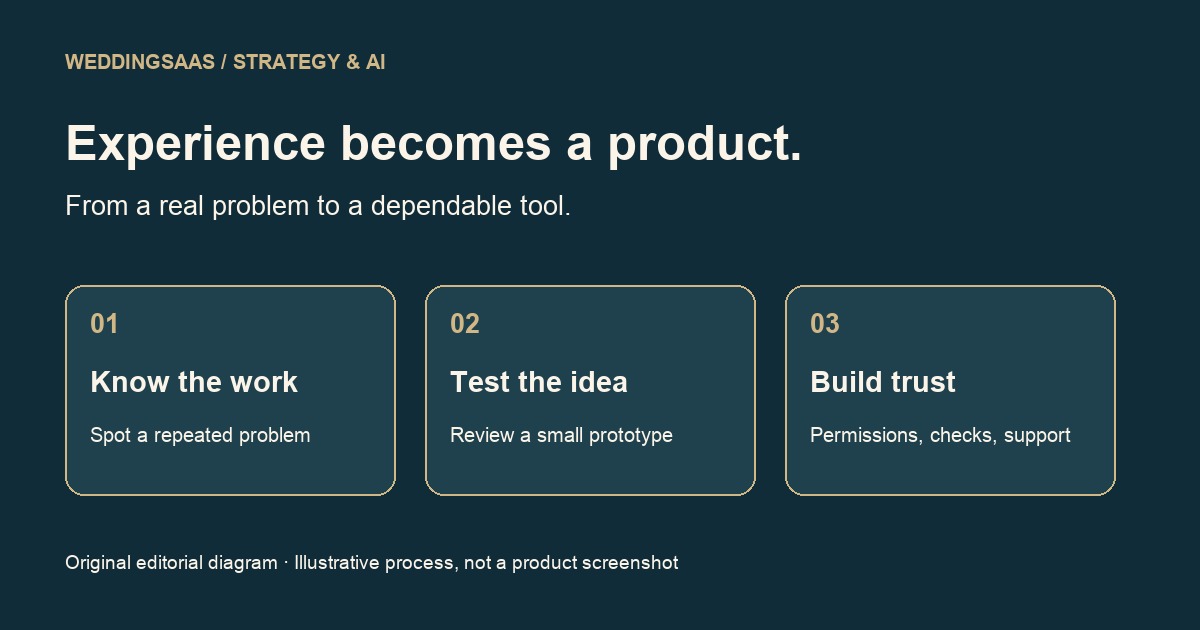
Experience becomes a product advantage
Consider a planner who receives updates through emails, spreadsheets and messages. Their immediate problem is straightforward: identify what changed, show which decisions it affects and prepare an accurate update for suppliers.
A carefully designed prompt could help with a controlled example. The planner supplies the relevant documents, reviews the result and corrects misunderstandings.
That first experiment matters. It lets someone test whether the proposed solution addresses a real frustration before commissioning a full product.
The advantage comes from knowing what to ask. An experienced planner might immediately notice that moving dinner affects speeches, photography coverage, transport and the venue’s staffing arrangements. Those connections belong in the product’s design.
The real product begins with the second wedding
Now introduce another couple, another venue and another set of permissions.
The tool must keep records separate. It must distinguish an approved timeline from a suggestion, recognise an outdated attachment and avoid sharing one couple’s information with another supplier.
If an email fails, someone needs to know. If an automation runs twice, it should not send duplicate requests. If a supplier changes a commitment, the record needs to show who approved the change.
These are product responsibilities. A persuasive answer in a chat window does not establish that they have been handled.
Build around a source of truth
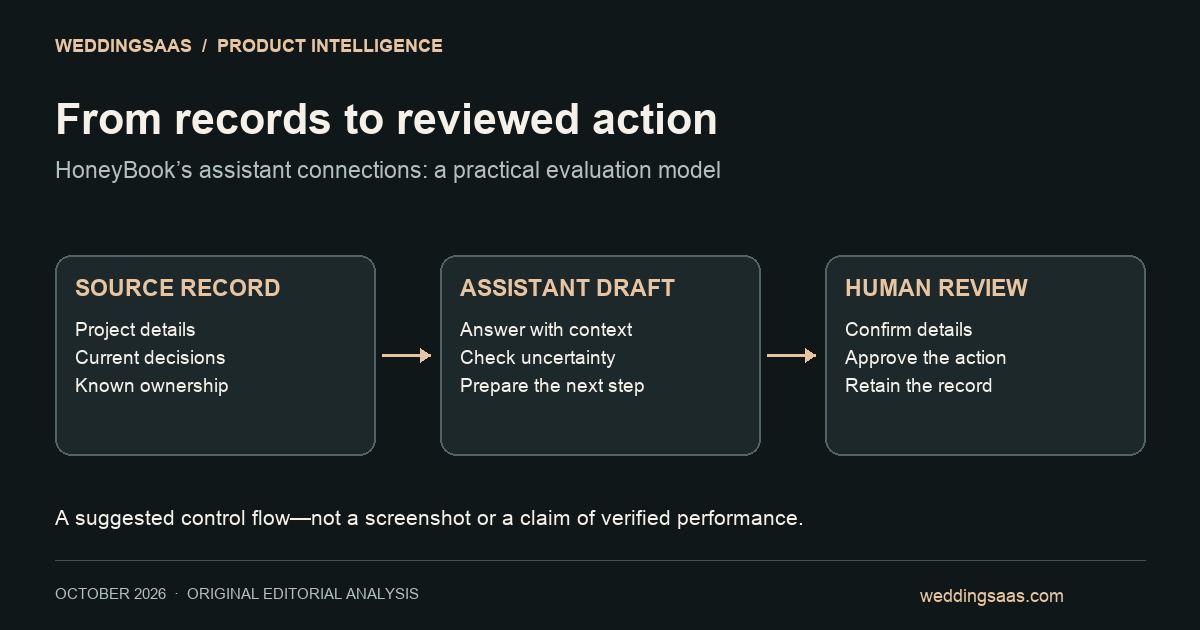
Wedding information changes constantly. A useful system needs an identifiable current record, with dates, versions and approval status.
AI can help organise information or draft a response. Important actions should be tied to verified records and appropriate permissions.
For example, a proposed guest-count change could generate a checklist of affected suppliers. It should not silently amend a signed catering agreement or authorise an additional payment.
Likewise, a well-formatted output can still contain a mistaken assumption. Validation must examine the substance, alongside the format.
Technical expertise still matters
Easier prototyping expands who can begin. It does not remove the need for security, testing, accessible design, reliable integrations or ongoing maintenance.
Some practitioners will build a small tool for their own business. Others will partner with developers. Established software companies can benefit from involving working professionals earlier and giving them meaningful influence over product decisions.
The strongest partnership gives operational experience and engineering equal weight.
Measure the job completed
A wedding tool earns its place when it helps people work better.
Useful measures include time spent resolving conflicting versions, missed handoffs, corrections required before sending an update and whether teams actually use the product during a busy event week.
A polished demonstration is a starting point. Repeated usefulness is the business.
The next valuable wedding-software company could begin with someone who has spent years thinking, “There must be a better way to do this.” AI may help them demonstrate the answer. Building trust will determine whether that answer becomes a product.
Editorial analysis. Examples describe possible workflows, rather than announced WeddingSaaS product capabilities.
References
- Original editorial analysis. Hypothetical workflows; no product launch, measured AI error rate or promised outcome is asserted.