The commercially interesting part of a wedding content creator’s offer is not the smartphone. It is the deadline. A couple is buying the ability to revisit and share the occasion while it still feels immediate. That makes delivery speed part of the product—and puts the cost of delivering it at the centre of the business.
In an October 18 BBC report, Charlotte Andrews follows Dorset creator Jade Burton, whose service produces social-ready wedding videos for next-day delivery. The report quotes industry expert Nikita Thorne describing prices of roughly £200–£1,000 and warning that relevant social-media skills do not necessarily mean experience delivering at weddings. Those are attributed examples and commentary, not a representative market-size or profitability study. 1
Low equipment costs do not make labour free
An accessible production tool can make starting easier without making the resulting business cheap to operate. A booking occupies preparation time, travel, attendance, file handling, selection, editing, delivery and customer communication. The useful unit is the completed assignment, with all of those hours attached.
An owner who counts only the hours at the venue can mistake unpaid editing for margin. Similarly, a freelancer working late after an event may meet the customer promise while quietly reducing the economic value of the booking. The cost has not disappeared because it does not appear as a wage payment to someone else.
The premium belongs to a defined promise
A fast turnaround can be worth paying for. The seller still needs to specify what arrives: selected clips, edited reels, a defined amount of footage, or some combination. A deadline without a delivery specification leaves the supplier exposed to open-ended work and the customer exposed to disappointment.
Scope therefore deserves as much attention as the package price. Attendance hours, editing rounds, extra formats and delivery method all change the workload. A clearly bounded package gives a business something it can cost, repeat and improve. A vague promise to capture everything does the opposite.
Capacity is a calendar problem
Demand is not the same as capacity to fulfil it. If filming occupies a Saturday and delivery is due on Sunday, another booking can collide with the first assignment’s editing window. The constraint may be the person, the deadline, or both. Adding bookings before understanding that collision can raise revenue while damaging reliability.
A practical operating model reserves production time after each event and records actual hours against the estimate. It also separates genuinely spare dates from dates that look empty only because post-production has not been put in the calendar. This is a proposed management discipline, not a claim about the practice of any creator in the BBC report.
Measure contribution before celebrating growth
For a service owner, the first calculation is booking revenue less the costs directly associated with fulfilling that booking. Travel, contracted help, delivery tools and payment costs belong in that view where applicable. Owner labour needs an explicit allowance too. Fixed overhead and taxes then need separate treatment; contribution is not take-home profit.
For example, an additional revision may consume little cash yet still use the time that would have supported another paying assignment. Measuring both cash costs and labour hours makes that trade-off visible. No illustrative model can establish the margins of the businesses mentioned in the source, whose accounts we have not reviewed.
Software can support the workflow; it does not change the business by itself
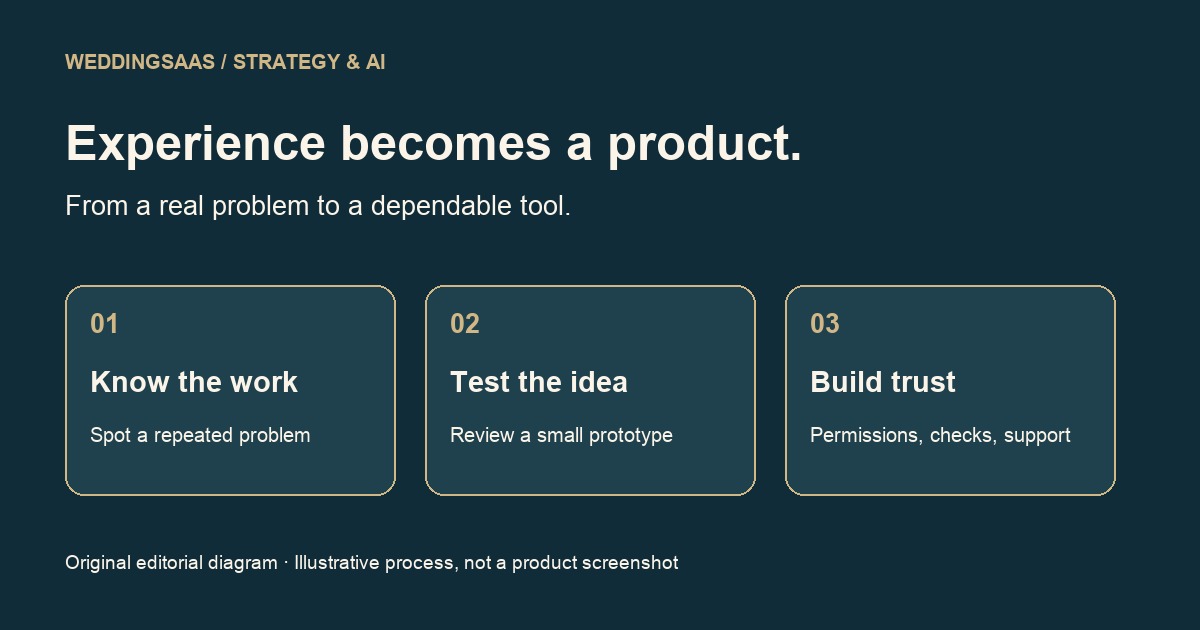
A repeatable workflow creates possible uses for scheduling, approval, file delivery and client communication tools. That is a product hypothesis, not evidence of a software market. Before selling another subscription, a supplier would need to establish which bottleneck matters, whether the tool removes it, and what a working creator would pay.
Nor should a labour-led production company be valued as recurring software revenue merely because it uses apps. Revenue quality depends on repeat demand, fulfilment requirements, customer acquisition and the degree to which delivery still depends on a particular person. Technology adoption and software economics are different propositions.
The investable question is execution
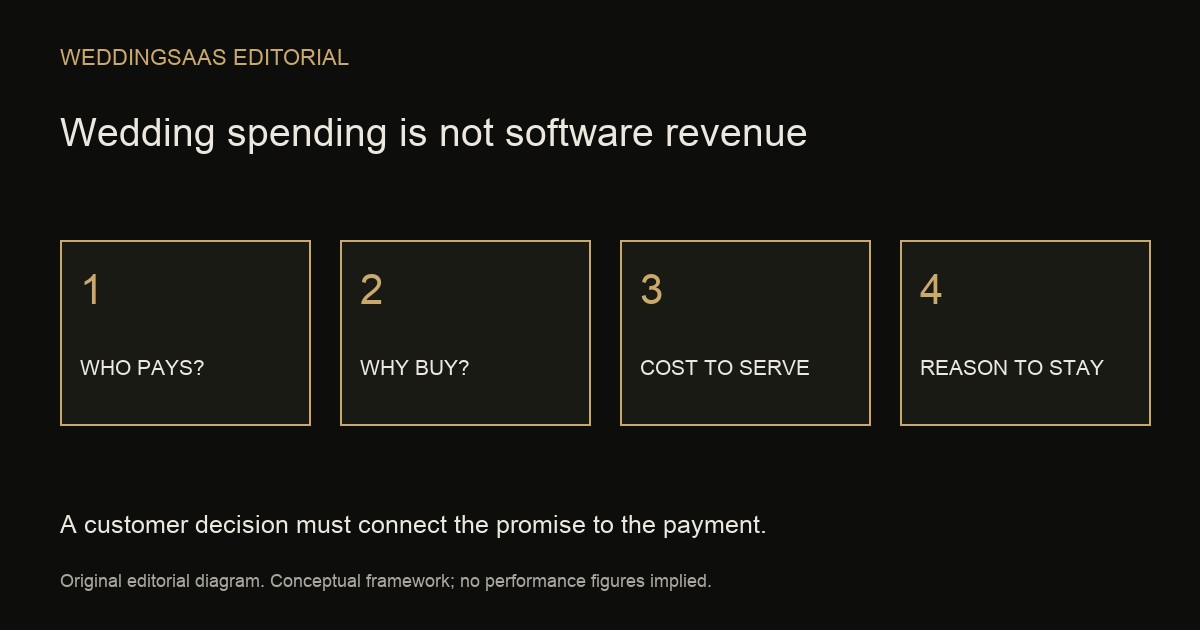
The emerging category deserves attention because it packages a recognisable customer desire: a shorter wait for a usable memory. Its durability will be tested in execution—clear scope, dependable turnaround, enough contribution to pay for the work, and a calendar that does not sell the same hour twice.
The BBC’s reporting supplies a useful example of the offer. It does not establish a market valuation, industry growth rate or investment return. The financial argument here is editorial analysis: when speed is what the customer buys, the business must price and protect the time that makes speed possible.
References
- Charlotte Andrews, BBC News, ‘How wedding content creators take you from aisle to Insta’, published October 18, 2026; reviewed October 19, 2026. Reported examples are attributed; the commercial analysis is WeddingSaaS Editorial’s own. Read the BBC report