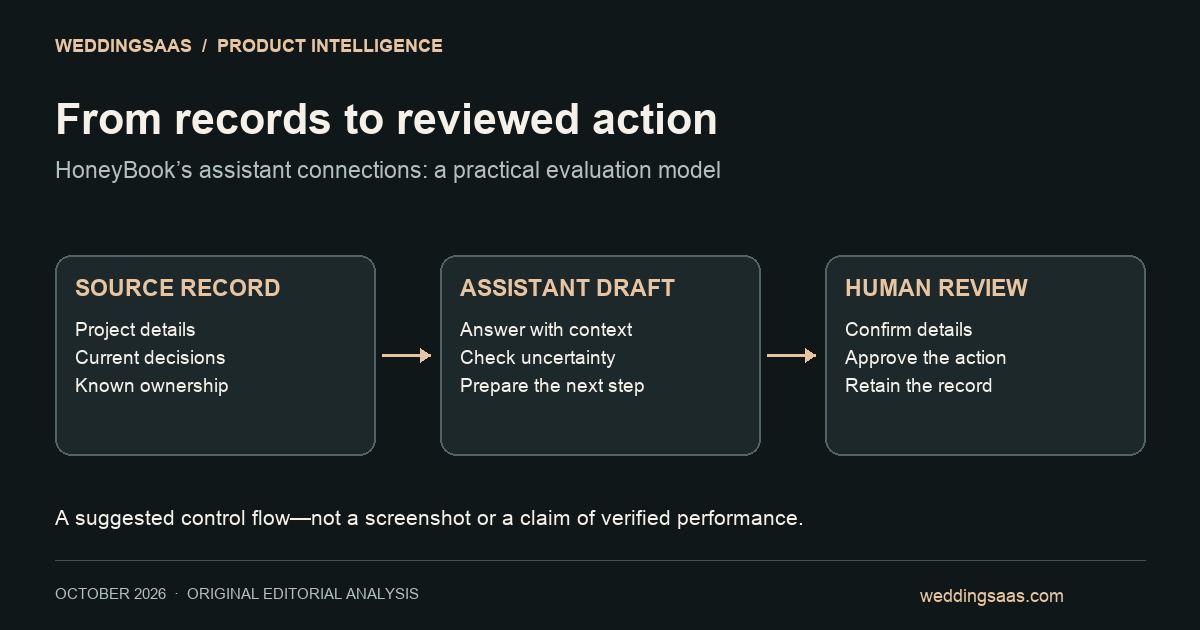
HoneyBook’s October 9 roundup describes client-specific portal previews, availability queries and date-relative automation waits. These announced features offer a useful reason to examine what each client sees before expanding a workflow. 1
This is operational analysis and an original proposed evaluation method. We have not tested a paid HoneyBook account, and the announcement alone does not establish eligibility or behaviour for your configuration.
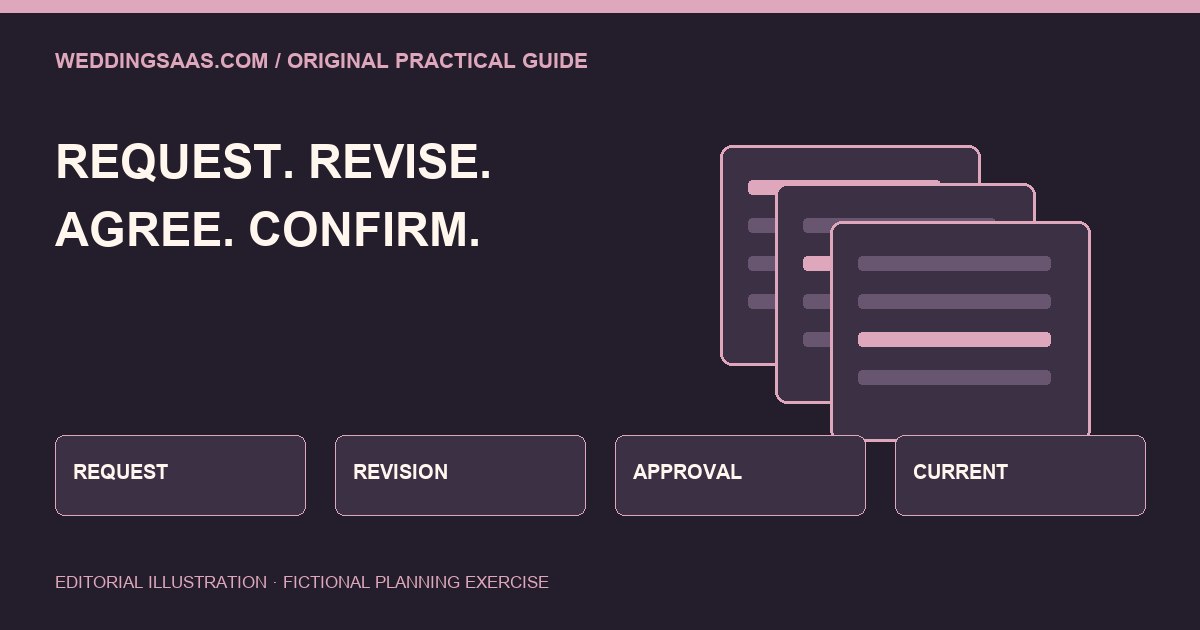
A wedding business can have a tidy internal workflow and still give a couple a confusing afternoon. The team knows which proposal replaced the first one, who approved an additional hour and why a reminder appeared. The client may see a file title, a payment request and three messages that seem to disagree.
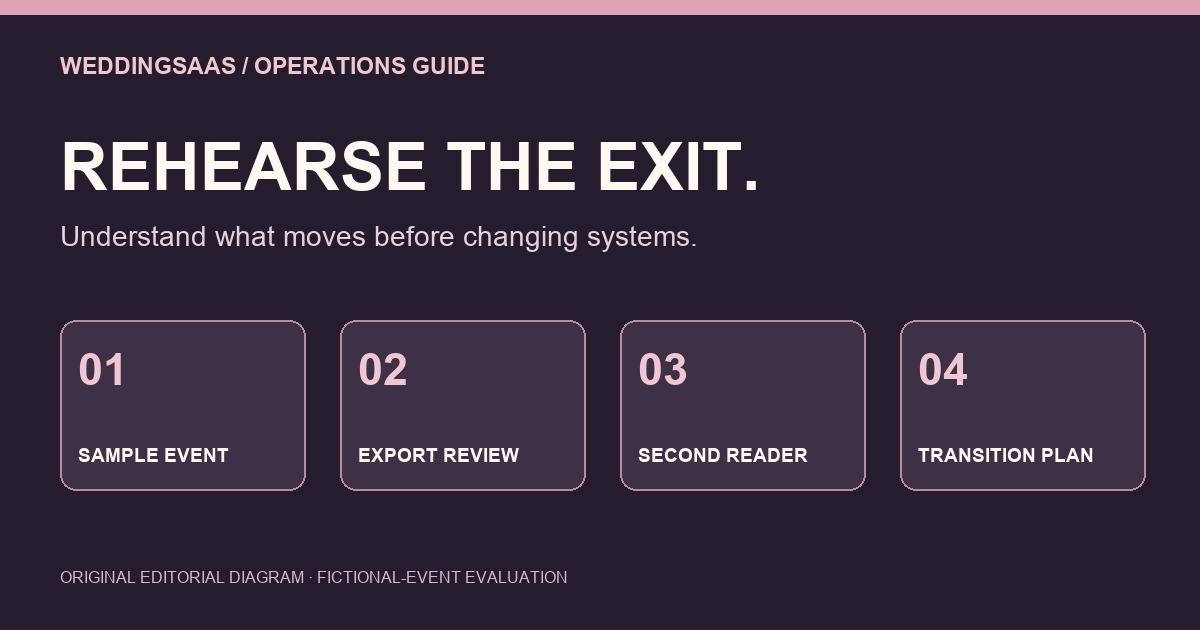
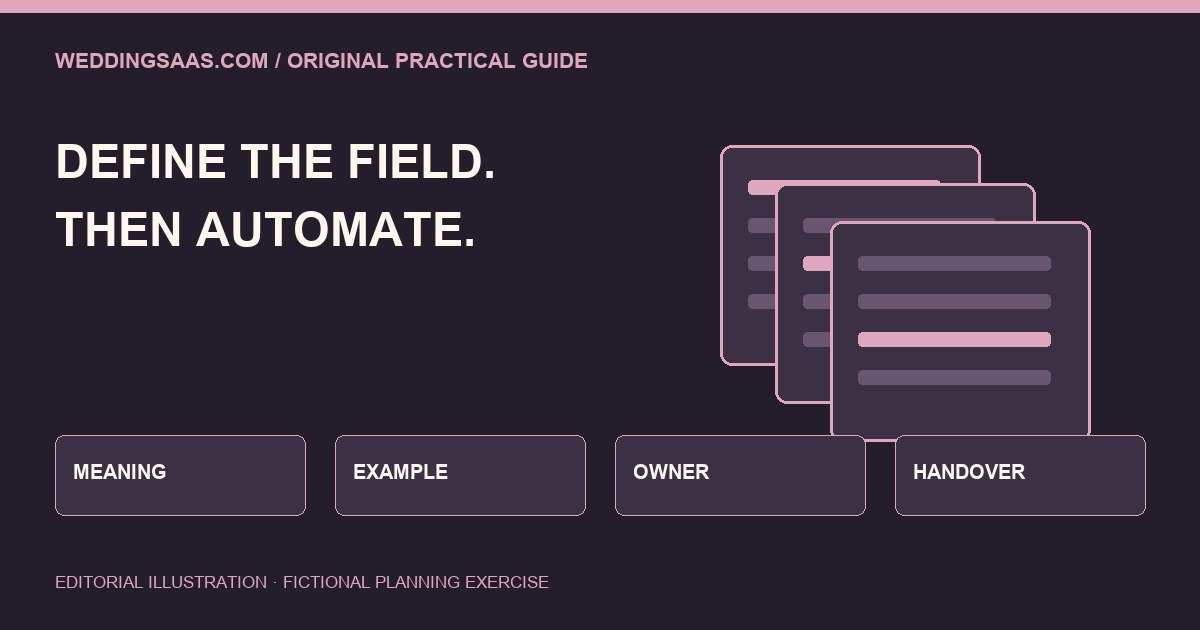
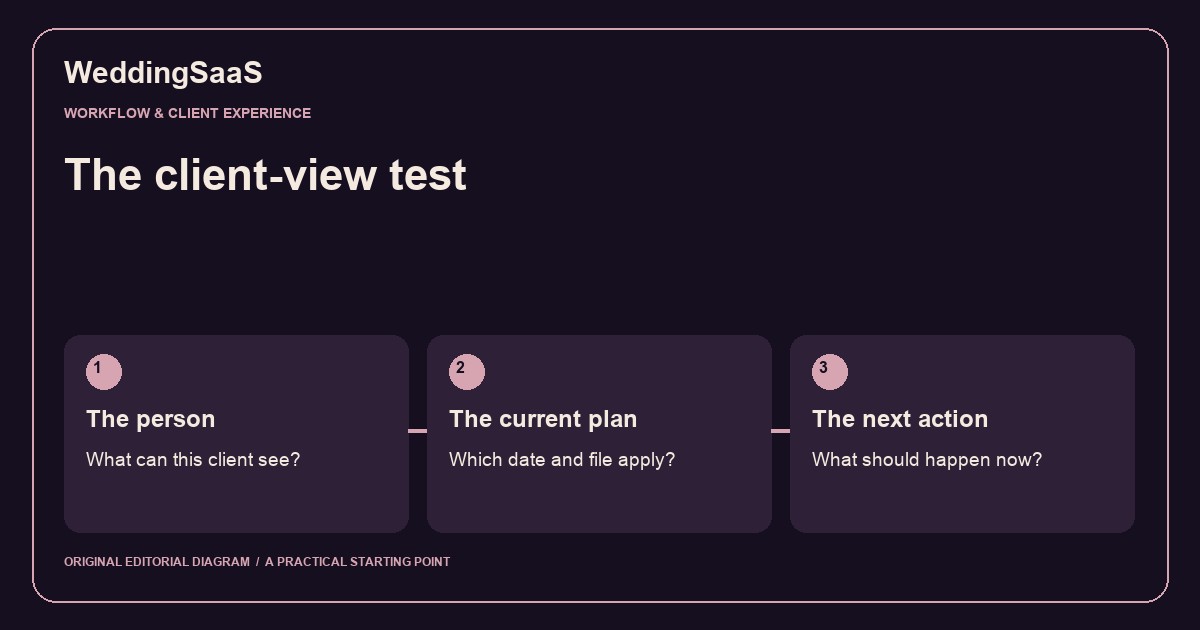
Our proposed test is simple: before expanding an automation, write down what each person should know and do at that moment. Then inspect the client-facing experience against that description. The exercise is useful whether a business uses HoneyBook or another system.
Start with one event and two different readers
Build a fictional event for the exercise. Use invented names and a sample schedule rather than copying a live client’s private records into a demonstration. Give each participant a role: perhaps one partner handles supplier decisions while another contact needs meeting information. Do not assume that receiving a message means someone should receive every document associated with the booking.
For each role, list the immediate question: What needs my attention? Which version is current? What can I change? Who should answer if something is wrong? Inspect those questions individually. A screen that looks complete to a staff member may still need a clearer title or a shorter instruction.
Give the changed-date scenario its own rehearsal
Now move the fictional event. Update the agreed date and deliberately leave an old draft in the record. Trace the next steps that your business intends to follow. Which reminders should move, which should stop and which need a human decision?
Record the expected outcome before running the exercise. Otherwise, it is too easy to describe whatever happened as the intended result. When a step behaves differently, identify whether the cause is a configuration choice, incomplete source information or a product limitation. This is a proposed evaluation method, not a report of a defect.
An available date is the beginning of a booking decision
A date in a calendar does not describe the whole job. A photographer might need travel time, an additional shooter or a different coverage window. A planner might need to check which parts of a multi-day celebration the enquiry includes. Decide what an automatic response is allowed to say before it reaches a real person.
A useful first response can acknowledge an enquiry and explain the next question. Confirmation of the service, scope and responsible team deserves its own explicit decision. Keep that decision separate from an internal status label.
Measure clarity before claiming efficiency
Invite a colleague who did not build the sample workflow to explain the next action in their own words. Note where they hesitate, which document they open and whether they can find the current contact. Repeat after revising the instructions.
The most useful result may be one fewer ambiguous message rather than an impressive automation count. Track the number of corrections required, unexpected messages generated and decisions that still require staff attention. Do not attach a time-saving percentage until you have measured comparable work.
What builders should take from the exercise
Software teams can make these rehearsals easier by exposing what information a step used, which event date it follows and what a client is expected to do next. That is our product-design argument, not a claim that a particular vendor already offers every capability.
The practical next step for a wedding business is modest: review one representative workflow from enquiry to agreed scope, and write down the conditions for every client-facing action. Better automation begins with an understandable decision.
Keep the source and the exercise separate
Source checked October 23, 2026. Our fictional-event rehearsal is editorial guidance, not an account of a product test. For the separate assistant-connection story, read HoneyBook’s AI Connectors Make the Wedding CRM a Working Source of Answers.
References
- HoneyBook, New and improved: September 2026 updates. Published October 9, 2026; checked October 23, 2026. Vendor announcement; no hands-on account test. Read HoneyBook’s original update