The interesting technology in a business network often begins after somebody finds a company. A public page can explain a service and create a route to an enquiry. What happens next depends on the working system behind it: who receives the message, what the business needs to clarify, how responsibility changes and whether the public information stays accurate. Discovery and operations are connected, even when they use different tools and belong to different service agreements.
Procore Construction Network provides a concrete cross-industry example. Its official documentation connects business-page visibility and designated bid contacts to receiving invitations, with responses handled through the relevant Procore tools. That is a useful pattern to study in weddings: information on a public network leads into a named business process. It is not evidence that every wedding network has those functions, and Procore's free network access should not be confused with the pricing of its other products.
WeddingSaaS.com covers the business of wedding technology; it is an editorial publication, not the enquiry-management application proposed in this article. It is part of the Weddings.io / Industry Army Marketing network, which creates a commercial relationship readers should understand. We use that relationship as a reason to distinguish published offers, verified functions and editorial recommendations carefully. The workflow below is an original design analysis for small wedding businesses, not a claim that the network already supplies every component.
Treat a public promise as the beginning of a workflow
A business profile makes practical promises even when it contains no formal guarantee. A reader may infer the kind of work accepted, the area served and the route for asking about a date. If those details do not match the team's current practice, a useful-looking page can create work that somebody must later undo. The technology problem is therefore partly about maintaining a dependable connection between public information and internal decisions.
Begin by identifying which facts the business is prepared to stand behind. Service area, contact ownership and the description of the work are a sensible starting set. Give each fact an owner who can confirm or correct it. The owner may be one person in a small studio, but the responsibility should still be explicit. A page that looks finished can otherwise remain unchanged long after the business has moved on.
This creates a more useful product requirement than simply asking for another profile editor. The system should help a team understand what needs review, who can approve a change and which public places use the information. A practical first version may be a controlled document and a scheduled human review. More software becomes worthwhile when the team can identify a recurring problem that the existing arrangement does not handle well.
Define the handover between discovery and enquiry
Consider a hypothetical wedding florist whose profile introduces its event work. A couple follows the contact route and asks about a celebration in another city. The enquiry needs to reach someone who can assess service coverage and the initial fit. It should not automatically become a proposal, a reserved date or a confirmed booking. Those are later decisions, with different information and responsibility.
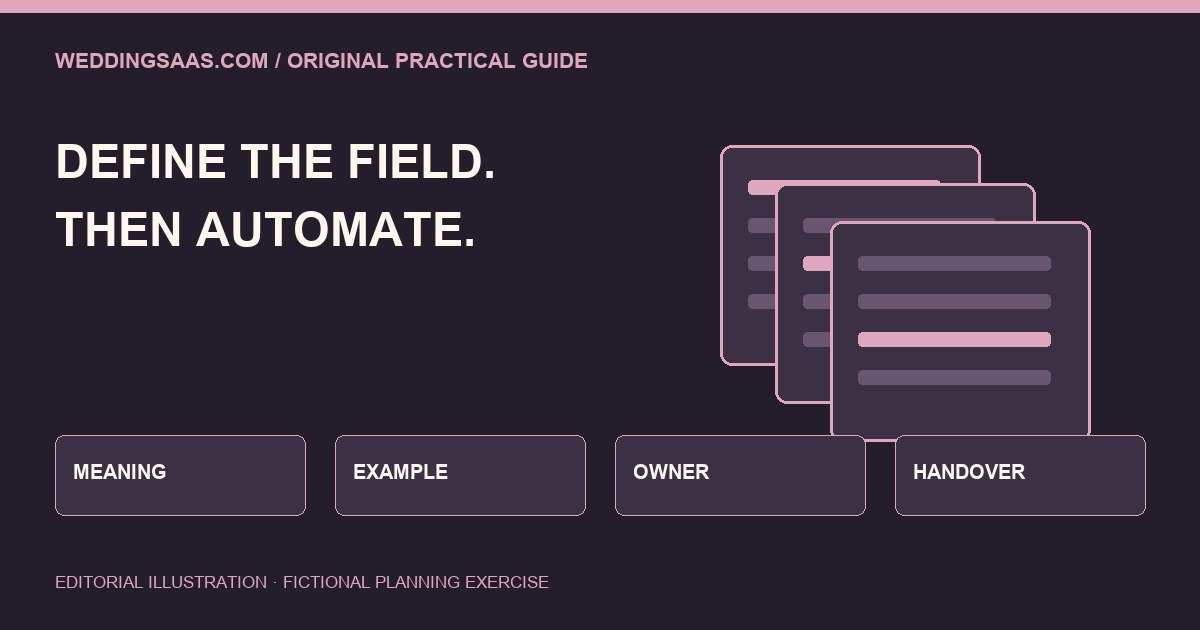
Describe that handover before selecting an automation tool. What information moves from the discovery page? Does the recipient know which business or service the reader meant? Is there a record of the source without copying unnecessary personal information? The point is to retain enough context for a useful answer, rather than create an elaborate data collection exercise around every visitor.
For a software founder, the boundary can be represented as a clear event: an enquiry was submitted through an agreed route. The receiving business then owns a response process. A network's product design should not quietly imply that the business has accepted work simply because a message was delivered. Clear states help the interface describe what has actually happened and give the customer an understandable next step.
Give every open conversation a responsible person
An inbox shared by several people can still leave a message unowned. The useful system records who is handling the conversation and what that person is expected to do next. In a small business, this need not require a complex assignment engine. A visible owner and a simple handover practice may resolve more confusion than a broad automation feature that nobody has configured around the team's actual work.
Account for absence and changes of responsibility. If the owner is away, the team needs a sensible way to reassign the conversation. If the business brings in a temporary coordinator, that person should receive only the information and actions appropriate to the task. These are workflow recommendations rather than claims about the capabilities of a current IAM or Weddings.io application.
A useful interface also makes closure explicit. The enquiry may be unsuitable, postponed or answered without further work. Those are legitimate outcomes. Leaving every conversation in an undefined active state makes it harder to see what still needs attention. A small set of states that the team understands is more valuable than a large pipeline whose labels mean different things to each person using it.
Separate a reply from a business decision
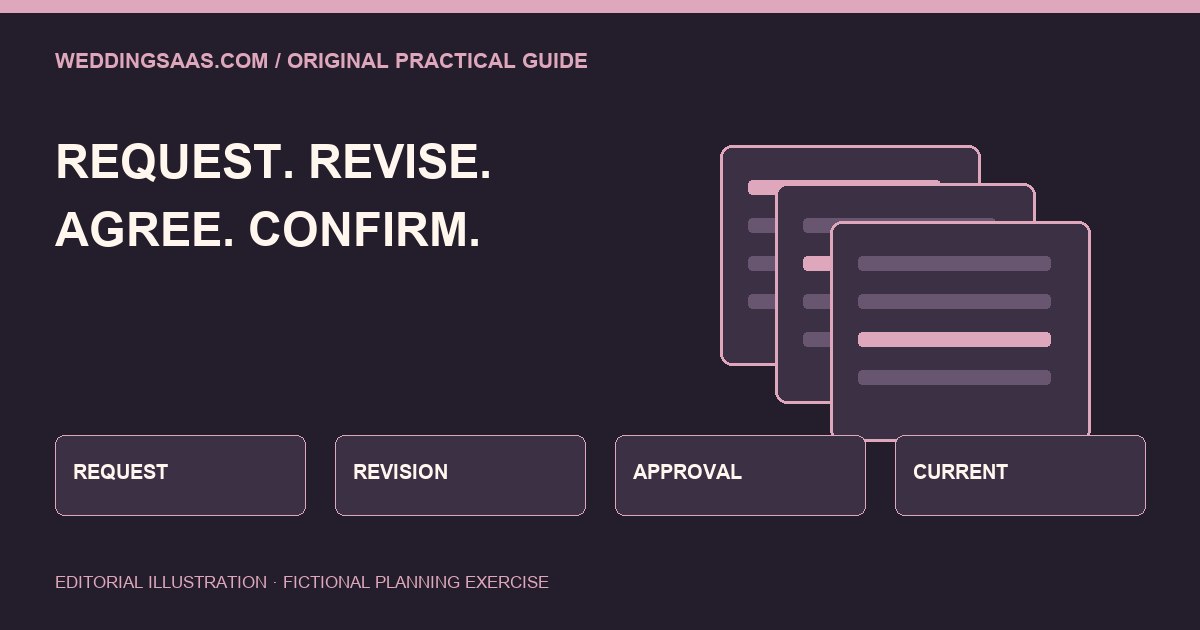
Sending a reply is an activity. Confirming availability, agreeing a scope and accepting work are decisions. Software that treats them as the same event can give a team a misleading sense of progress. A polite acknowledgement may be useful, but it does not establish that someone has assessed the request or that the couple has received an answer to the question they actually asked.
Design the record around the decision that is still open. In the hypothetical florist example, the next step might be to clarify the venue and installation requirement before discussing an estimate. The record should make that dependency understandable. It should not invite an automatic promise about the work before the business has enough information to decide whether it can provide it.
This is also a useful way to evaluate automated drafting. A suggested reply can help a person communicate a decision they are authorised to make. It should not invent the decision, an available date or an inclusion in a package. The value of the assistance depends on its connection to accurate information and an accountable review, not simply on how quickly it produces a fluent paragraph.
Keep distribution and fulfilment as distinct records
A published page, a social post and an enquiry are different events. A business may commission one or more of them through separate services. The working system should retain what was agreed and what was delivered for each, rather than assume that a marketing activity proves a sales result. This makes the service easier to review and helps the client understand what the next conversation should be about.
For publishing work, the record might include the approved topic, image source, destination, publication link and correction contact. For enquiry handling, it might include the responsible person, current status and next agreed action. These are suggested record types. They are not an assertion that any particular network has deployed the corresponding software or that a publication link guarantees a future customer.
The relationship between the records is still useful. If an enquiry mentions a confusing public description, the business can investigate the source and correct it. If a published article explains a service well, the team can use it to answer a relevant question. The link is contextual, rather than a reason to turn every message into a promotional sequence or every page into an unsupported claim of business performance.
Make profile maintenance part of ordinary work
A profile editor is useful only if somebody knows when to use it. Connect review to real changes: a new service boundary, a different contact, a revised portfolio or a location the business no longer serves. A software product can prompt those checks, but a team must still decide which information is correct. Automation should support that decision without publishing an assumption as a verified fact.
Maintain one approved version of the important description and identify which public pages depend on it. This does not require every channel to use identical wording. Different readers may need different context. What should remain consistent are the underlying facts: the business's identity, actual service and contact route. Editorial adaptation becomes safer when it begins from information somebody is responsible for maintaining.
Changes should be reviewable. A team benefits from knowing what changed and why, particularly when several people or external providers help maintain its public presence. A simple change log may be sufficient at first. A more sophisticated system should earn its place by reducing a demonstrated coordination problem, rather than make a small business administer a process designed for a much larger organisation.
Evaluate affordability across the whole arrangement
A low entry price can make a service approachable, but it does not describe the whole cost of using it. Staff time, setup, recurring reviews, additional services and the effort of moving information between tools all matter. A small wedding business should be able to identify the service it is paying for and the work that remains its own responsibility. That is a more useful affordability test than comparing isolated headline numbers.
The current public pages illustrate why specificity matters. Weddings.io's pricing page describes a $10 USD annual vendor option while saying payments are not open. IAM lists separate services, including brand management from $10 USD per month, with scope and availability to be confirmed. These are published offers checked on November 12, 2026, not a verified combined subscription or proof that a full software-and-marketing package is available for one entry price.
The owner's informal “less than two Starbucks a month” analogy conveys the intended accessibility. It cannot establish a fixed coffee price or a universal saving, and the annual and monthly offers should not be collapsed into one comparison. For a purchasing decision, ask for currency, billing period, inclusions, exclusions and the actual next deliverable. Clear terms are part of a useful product experience, especially at an affordable entry point.
Use a bounded pilot to discover the useful automation
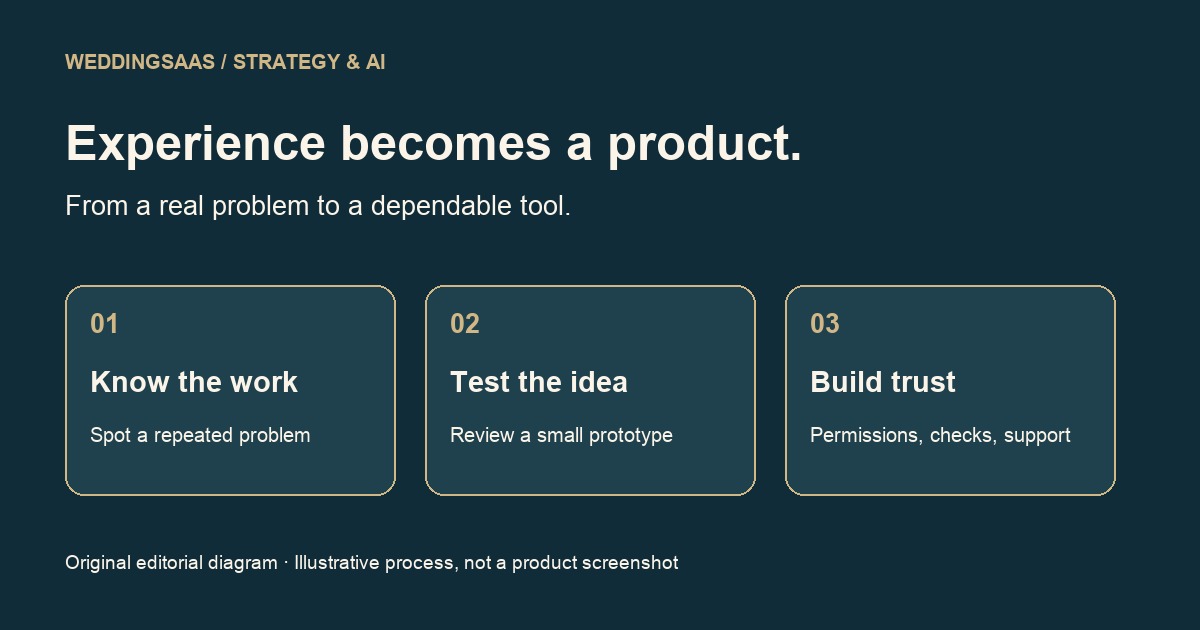
Before commissioning a large integration, follow a small number of actual enquiries through the existing process. Record the handovers that require clarification, the information repeatedly copied and the decisions that wait for a particular person. Obtain appropriate authority for access and keep personal information limited to the work. The exercise is about understanding the process, not collecting a broader set of customer details just because a new tool can store them.
Choose one bounded improvement. It might be assigning ownership consistently, keeping a profile fact current or making the next action visible. Define what a successful change would look like in the team's ordinary work. The pilot should be small enough to stop or adjust without disrupting the business, and it should preserve the ability of a person to handle an unusual request thoughtfully.
Retain the unsuccessful cases as well as the smooth ones. A system that works for a straightforward enquiry may become confusing when the couple changes the location or asks for a service outside the usual scope. Those exceptions can reveal which decisions need human review and which information the workflow lacks. They are useful product evidence; they should not disappear from the evaluation because they complicate a success story.
Ask vendors for evidence of the actual integration
A product can describe several different levels of connection. It may provide a link, import a file, send a notification or update another system through a supported interface. Each can be useful, but they are not interchangeable. Ask the provider to demonstrate the function relevant to your process and explain what happens when an action fails or information changes after it has been sent.
For a small wedding studio, the most important demonstration may be ordinary: an enquiry reaches the correct place, someone can claim responsibility and the agreed next action remains visible. A complex presentation of future possibilities is less useful if that basic journey cannot be shown. The test should correspond to the function being offered, rather than a broad claim that the product is powered by AI or connected to an ecosystem.
Also establish how the business can retrieve its working information and end the arrangement. Ownership of original content, access to records and responsibility for public updates should be understandable before reliance grows. These are questions for the actual provider and agreement. This article does not establish a legal entitlement or certify any vendor's implementation; it identifies practical points that a buyer can ask to see explained.
Test lead quality before claiming the model works
The founder's thesis is that credible business information and better-directed conversations can create more value than another interface on its own. That is a proposition to test. A list of companies does not become a verified list because it has a polished design, and a message does not become a qualified opportunity because software delivered it. The definitions and evidence behind those labels matter to the business receiving the introduction.
Agree what a relevant enquiry means for the pilot: the requested service is one the business offers, the location is within its actual coverage, and enough context is available for someone to assess the next step. Record unsuitable messages and unanswered questions as well. These are proposed evaluation criteria, not measured results from IAM or Weddings.io. They let the team investigate quality without inventing a conversion rate or a financial return.
Then follow the handover to an observable outcome. Did someone review the request? Was a suitable next conversation arranged, a question answered or the enquiry closed honestly? A completed work record can establish what happened in that case. It cannot, by itself, establish a network valuation, profitability or the terms of a founding-partner arrangement. Keep the business thesis connected to evidence before expanding the promise.
What the cross-industry comparison actually teaches
Procore's documentation is useful because it describes a relationship between public discovery, contact settings and subsequent work-related actions. A wedding technology team can study that relationship without copying the product or claiming the same reach. The transferable idea is that a network becomes more useful when its public information connects to a process people can understand and supervise.
Weddings.io provides a wedding-specific publishing and planning context, while IAM describes a broader marketing and systems proposition. WeddingSaaS analyses the technology and business models around that market. Keeping those roles clear makes the comparison more useful. It allows readers to assess an actual offer, a developing ambition and an editorial recommendation on their own evidence, rather than treating a shared brand network as proof of every feature.
Our assessment is that the strongest affordable system is one a small team can operate with confidence. Give the public promise an owner, give the enquiry a destination and give the next decision a visible record. Then connect the pieces that repeatedly create useful work. Distribution can open a conversation; an understandable workflow helps a business respond well enough for that conversation to matter.
References
- Procore Construction Network: business discovery and free public business pages. Current page checked November 12, 2026; no new launch date is asserted. Procore Construction Network
- Procore primary support overview: business profiles and connections. Used for cross-industry context, not evidence of equivalent wedding-platform functions. Procore network overview
- Procore primary support: visibility, bid contacts and responding to invitations. Procore bid-invitation workflow
- Weddings.io current published pricing: confirm the service, currency and billing period; the page says payment gateways are not open. Checked November 12, 2026. Weddings.io pricing and availability
- Industry Army Marketing: current description of its services and separate pricing terms. Marketing descriptions are not independent operational tests. Checked November 12, 2026. IAM services and current offers
- WeddingSaaS editorial purpose, ownership and commercial-relationship disclosure. WeddingSaaS editorial standards and ownership
- Weddings.io public ownership statement. About Weddings.io